Backing Up Beaker
One evening, when we were patrolling the lower Rio Grande Valley, my partner and I wound up as the lone “rovers” in the entire western 2/3 of Harlingen station’s section of the Rio.
All our other Line agents were crammed up against (or in) Brownsville’s sector, to the east of ours, sitting on “Xs.” The X, placing agents in designated, fixed posts along the border, had made sense in reducing cross-border crime in El Paso, but it was never intended to actually stop illegal immigration or drug smuggling. It didn’t make much sense in the single canopy jungle that bordered the Rio Bravo del Norte where we were.
But they didn’t ask us.
“All my Xs are in Texas,” as George Strait sang.
The Western half of our sector was already notorious for dope trafficking, and since the X had come to the Valley, we had left it practically unsupervised, so the smugglers were getting pretty bold.
We were on US 281, the old military highway that paralleled the border, near a deep loop of land called Galveston Bend.* We came upon a lone Cameron County deputy I knew named Gilbert Briones. He was easily recognizable from a distance, because he was slim, he had big, steeply sloped trapezius muscles, and he had a narrow head.
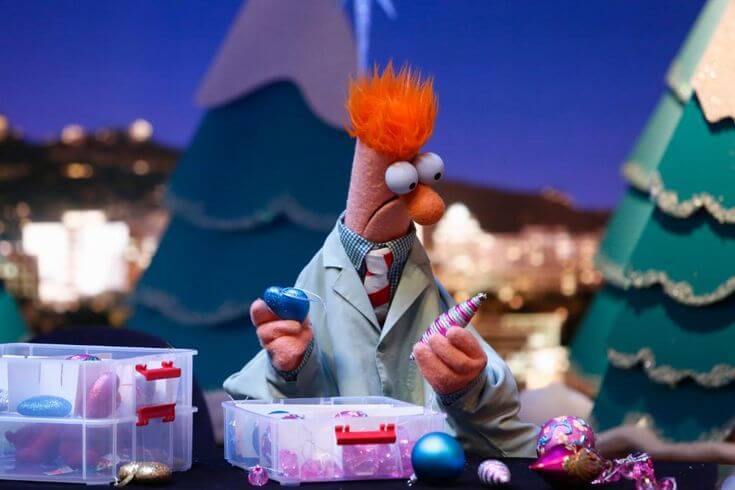
Briones was the spitting image of “Beaker” from the Muppets.
*****
When I had met Beaker, about a year or so before (on 07 Jul 1998), we had been in a little bunker we’d made by ramming some patrol vehicles together. We’d been on a manhunt for three murderers that had gone terribly wrong.
As I got in the habit of saying afterward,
“Sometimes, when you hunt for killers, they find you.”
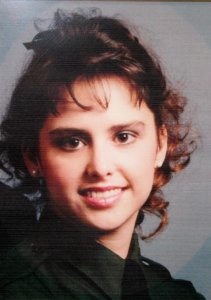
According to the scoreboard, our side was losing. We had one bad guy down with about 8 or 9 holes in him, but still two bad guys we couldn’t find. Three good guys had been shot. The agent at our feet, Susan Lynn Rodriguez, was face down in a rapidly expanding puddle of precious blood. Mike R, her partner, was crouched next to her, telling her to hang in there, but she wasn’t responding.
I had an M4A1. I was the ONLY person there who had brought a rifle to that manhunt, other than the bad guy who had shot her. The only other good guy there with a long gun was my partner, Ed K, who had a shotgun, even though we’d been dispatched to backup Cameron County on a search for three suspects known to have had an AK and an AR.
Cameron County had recently traded in all their wheel guns (revolvers) and long guns to purchase high capacity Beretta autopistols at a group rate. They had been planning to buy shotguns with future funding.** Our agents who were there had mostly responded directly from the X, where contact with bad guys was neither expected nor encouraged, and were only packing pistols.
I was good with a rifle; the top marksman from my Security Police and Border Patrol academies, I had only weeks before competed with a USBP issued M14 at the Texas State Police Games near Dallas.
I was mediocre as a medic. It was only my part-time gig in the AF Reserve. That was before the formation of BorSTAR, BP’s search and rescue arm trained as EMTs and paramedics for responding to medical emergencies in remote areas of the border.
But there were no more bad guys we could see that needed our immediate attention, and Susan did, so I handed my carbine to Beaker–he seemed very grateful for the upgrade in range and firepower–and tended to Susan as best I could.
A few minutes later, when an ambulance rolled into that Warm zone, there was still some hope we could get her back. I didn’t know the bullet that had hit her in the neck had bounced off her spine and lacerated a carotid in her neck, as well as the main artery serving her right arm and right brain at or near the junction with her aorta.
The medics jumped out and ran over to us without any Kevlar to protect them. I wanted to kiss those guys.
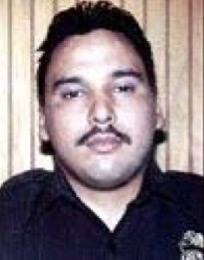
After we got Susan into their ambulance, I asked about the other downed agent, Ric Salinas, even though I could see that he was a lost cause. He’d been shot in the head. One of the medics checked his pulse, looked at me, and shook his head.
There was also a Cameron County deputy, Corporal Raul “Rilo” Rodriguez Sr., who had been pierced through the lung by a rifle bullet, but some of his partners had stuck him in a cruiser and rushed him to Valley Baptist Medical Center. He survived.
With no more good guys to tend to (I wasn’t about to venture from the safety of our circled wagons to tend to the killer, who was on the edge of a corn field, where his accomplices might have been lurking to ambush us), I went back to Briones and asked for my rifle back. He seemed reluctant to part with it.
*****
A year or so later, we rolled up behind Beaker in Galveston Bend. He had stopped three men in a car, and was searching it for dope.
By himself.
That’s rural law enforcement.
Their trunk was open, and they were all standing behind the car. He was frisking them, one by one.
At our respective academies, we’d all seen the horrific video of the 23 Jan 1991 murder of Texas Constable Darrel Lunsford by three unarmed men. They’d wrestled Lunsford to the ground, taken his gun, and executed him. There were no body cams back then, but it was one of the first and most horrific such assaults on officers to be caught on a dash cam.
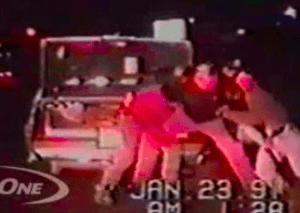
His killers had discussed their plan in Spanish, but Constable Lunsford had either not heard them or not understood. This prompted me to write a Clint Eastwood quote from Heartbreak Ridge on my one of my Spanish texts at the Border Patrol Academy:
“And I don’t want to get my head shot off in some far away land because you don’t habla. ¿Comprende?”
Throughout that video–that is, until they took him down–Lunsford had been standing behind an open trunk with three men.
Just like Beaker was.
Beaker was slightly crouched, almost cat-like. He kept his center of gravity low, and his knees flexed, in case he suddenly needed to spring out of the way. I could see the muscles in his forearms rippling, and the tension in his shoulders.
Unlike Lunsford, who had towered over the three dope smugglers who killed him, these three suspects were Beaker’s size, or bigger. He was using the “interlaced fingers on the top of the head” method to control each one as he searched. Gil would frisk one while the others stood off to the side, then he had them switch.
So focused was Beaker on the three guys who outnumbered him, he hadn’t even noticed us pull up.
My partner was a rookie, but he was driving.*** I stepped halfway out the passenger side and leveled my long gun at the the suspects, holding it behind my door just below the bottom of the window. Normally I carried a rifle, but for some reason I had one of our Scattergun Tech modified Remington 870 shotguns that day. Traffic was sparse on US 281, but if anybody drove by I didn’t want to alarm anyone, and I didn’t want to “escalate” since I didn’t know specifically what was going on yet.
I instructed my partner to walk around BEHIND our rig, and to approach them from the side, well off the road (our cars were parked on the shoulder). “Walk up beside them, not too close, and let him know you’re there.”
“And whatever you do,” I added, “don’t get between this shotgun and those guys.”
When Briones caught sight of my partner out of the corner of his eye, his head snapped over to the BP agent. He saw another badge in a uniform.
Then Beaker looked back over his shoulder. When he saw me, his eyes locked with mine.
I could see on his face that he recognized me, from that horrible day in July of ’98.
He also recognized the way I was holding something long and substantial behind the door of that Ford SUV. A something that can only be held level for long with both hands.
Beaker didn’t know me very well, but he knew that I “rolled heavy,” long gun-wise. He suddenly realized that if anybody in that group tried to hurt him, I was gonna rock – their – world.
Beaker’s shoulders relaxed.
The day we’d met, a year or so before, was the worst, and also one of the best, in my life. We’d lost friends, but I also witnessed, with my own eyes, acts of selflessness and heroism that reaffirmed my faith in humanity. After five years working “the street,” that faith had been desperately waning before that.
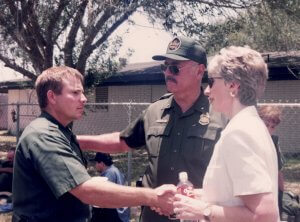
I’ve had many adventures (and misadventures), before and since, in a quarter century of civilian law enforcement.
But that moment when Beaker’s eyes met mine, and he knew he was safe ’cause I was there for my brother, was the highlight of my career.
“We few. We happy few . . ..“
–George H, lead instructor, Heloderm LLC
The Muppet image at the top of this article was taken from Pinterest.
*****
*Appendix I: Galveston Bend
Galveston Bend played a small, almost forgotten part in American military history.
When the Texians (with an i, what they called themselves in those days) achieved independence from Mexico, the Mexicans recognized the new border as being along the Nueces River, that flows through Corpus Christi. The Texians, and after the annexation of Texas on 01 Mar 1845 the Americans, recognized the Rio Grande (also called the Rio Bravo del Norte), much farther south, as the border. President Polk sent Brevet Brigadier General Zachary Taylor (along with newly minted 2nd Lieutenants George Meade and Ulysses Grant, among other West Point grads) to the Rio Grande to back up those claims. Taylor set up Fort Texas (later renamed Fort Brown, after its KIA commander, Major Jacob Brown–and hence, the present day town of Brownsville) across the Rio from Matamoros, Mexico.
On 25 April 1846, Mexican forces under General Mariano Arista crossed the Rio Grande (into what, in their eyes, was still Mexico) and attacked a reconnaissance force of 60 US dragoons under Captain Seth B. Thornton, about 20 miles west of Ft Texas, in or near what we today call Galveston Bend. The dragoons suffered 11 KIA. Several more were wounded. Most or all were captured. This gave President Polk the excuse he wanted to declare war on Mexico. Polk told Congress that “American blood has been shed on American soil.” See Maurice Matloff’s American Military History, pp. 163 – 64.
A marker about that skirmish is on US 281 near Cannon Road, not far from where we were backing up Beaker.
*****
**Appendix II: Why Almost No Long Guns?
Some Cameron County long guns were stored in Brownsville, but were not in that cornfield south of San Benito when and where they were needed. As with the North Hollywood Bank of America shootout of the previous year (28 Feb 1997), guns in an armory do little good for an officer pinned down at the scene.

Cameron County deputies formerly carried a hodge-podge of long guns, including shotguns and rifles, on patrol. According to the Valley Morning Star, after Sheriff Omar Lucio took office in Jan 1997, Cameron County long guns (probably mostly shotguns in that era) were turned in, along with their revolvers, for trade-in to get the deputies higher capacity Beretta 92 pistols at a group discount, within “acceptable” spending limits.
20th century handguns were certainly a step in the right direction. Cameron County had tentatively planned to buy shotguns with a later FY budget. Senior Sgt Ronnie Saenz said “It’s bad timing that this incident occurred without these weapons” [long guns]. “We want everything department issued.” After this incident, Cameron County opted for patrol rifles.
–Source “Deputies Seek Guns: Petition Asks Sheriff for More Firepower,” by Laura B. Martinez, Valley Morning Star, 15 July 1998
*****
***Appendix III: Why We Avoided Having Rookies Drive
My partner was newer, but had to have been past is initial probabationary period. As a general rule, we didn’t let rookies drive. Before the end of your probationary period, law enforcement officers can be dismissed without cause.
After passing probation, you could wreck a rig and not lose your job. There was a canal nicknamed “Captain Nemo’s” on our sensor maps, because one of our agents, Danny S., had parked his patrol rig completely underwater in it. He lived, and didn’t lose his job.
Patrol Agent Terry H had launched our rig almost completely across a dry canal of equal size, like Evil Knievel, driving without lights at night. We hit near the top edge of the other side, and wound up in the canal in “Space Shuttle Launch” position. That SUV (if memory serves, a Ford Bronco) was the last of our “puke green” patrol rigs, a color few liked that in retrospect was surpsingly similar to the sage green US Army uniforms in Iraq. All our other rigs were newer, painted white with a green stripe; that one was so beat up, even before that, that we called it “La Piñata.” La Piñata’s front wheels were bent outward at about 40 degrees, and she never drove again.
Terry wound up with a perfect imprint of the edge of his watch–including the dial–punched into his upper lip, becasue his left hand (only) had been on the upper part of the steering wheel, and he wasn’t belted in (no airbags in those old rigs). But Terry was a former Army paratrooper, and used to being slammmed around. I was a wussy Air Force Reserve medic, so I wore my seat belt, and I was fine. Terry was past his probation. As far as I know, he didn’t even get days on the beach.
That was when our trucks had something called a “chassis.” Later, we got SUVs that were unibodies, essentially mini-vans with a lift kit. The rough handling they got along the border soon bent many of them out of shape—they were never meant for that kind of hard duty–so the Sector Chiefs started cracking down on agents who bent up a rig, putting letters of reprimand in their files.
But it is still taken as a given that if you do that work long enough, you will wreck or at least bend up a patrol vehicle, if not more than one.